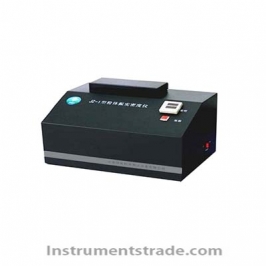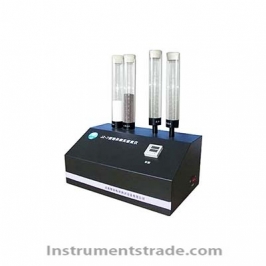
Position: Home > > Physical property test > Granule/powder analysis instrument > Powder physical property tester > HYL-1001 Multifunctional Powder Physical Properties Tester

HYL-1001 Multifunctional Powder Physical Properties Tester

Product ID:WLft011

Price: Please inquire PDF Format
Supply Ability:50SETS/MON
Port:SHENZHEN
  • Product Introduction
  • Other information
  • Model NumberHYL-1001
    Brand NameDDHAOYU
    Payment TermsTT,PAYPAL,Alibaba.com Pay
    HYL-1001 Multifunctional Powder Physical Properties Tester
     
    Product Introduction
    The HYL-1001 Multifunctional Powder Physical Properties Tester is a comprehensive powder characterization instrument developed for evaluating the physical and flow properties of powders.
    The system is developed according to the requirements of ASTM D6393-99 Standard Test Method for Bulk Solids Characterization by Carr Indices, with reference to key technical requirements in GB/T 5162-2006 / ISO 3953:1993, GB/T 1482-2010 and GB/T 16913.3-2008.
    Powders behave as complex two-phase systems in both stationary and flowing states. Particle characteristics, interparticle friction and cohesion directly affect powder processing, conveying, packaging and storage. The HYL-1001 provides a convenient way to comprehensively evaluate these properties using multiple standardized test methods in one instrument.
    The tester can directly measure tapped density, bulk density, angle of repose, collapse angle, spatula angle and dispersibility. Based on these measurements, it can calculate difference angle, compressibility, voidage, uniformity and cohesiveness, and can further obtain flowability index and floodability index according to the relevant Carr Index evaluation method.


    Key Features
    1. Multifunctional Powder Characterization
    One instrument can evaluate multiple important powder properties, including:
    •  Tapped density
    •  Bulk density
    •  Angle of repose
    •  Collapse angle
    •  Spatula angle
    •  Dispersibility
    •  Compressibility
    •  Voidage
    •  Cohesiveness
    •  Uniformity
    •  Flowability index
    •  Floodability index
    2. Multiple Standardized Test Methods
    The HYL-1001 incorporates test methods based on several international and Chinese standards, providing greater flexibility for different powder characterization requirements.
    3. Comprehensive Carr Index Evaluation
    The instrument supports comprehensive evaluation of powder flow behavior through Carr Index-related physical parameters, helping users assess powder handling and processing characteristics.
    4. Flexible Testing Conditions
    Different measurement methods can be selected according to the powder characteristics and applicable standard, making the instrument suitable for a wide variety of powder materials.
    5. Simple Operation and Good Repeatability
    The multifunctional design simplifies powder characterization and helps improve testing consistency and repeatability compared with separate manual measurement procedures.
    6. Suitable for Industrial and Research Applications
    The HYL-1001 can be used to characterize powders for processing, transportation, packaging, storage, formulation and research.


    Working Principle
    The HYL-1001 characterizes powder materials through a combination of density, flowability, angle and dispersibility measurements.
    Tapped Density
    A specified quantity of powder is placed into a measuring container and subjected to controlled tapping. The tapping reduces internal voids and produces a more compact powder bed. The resulting mass-to-volume relationship is used to determine tapped density.
    The HYL-1001 supports tapped density measurement methods based on ASTM D6393-99 and GB/T 5162-2006 / ISO 3953:1993.
    Bulk Density
    Powder is allowed to naturally fill a specified container without additional vibration or compaction. The mass and occupied volume are used to determine bulk density.
    The instrument supports multiple bulk density methods, including:
    •  ASTM D6393-99
    •  GB/T 1479-2010, funnel method
    •  GB/T 16913.3-2008, natural accumulation method
    Angle of Repose
    Powder is allowed to fall naturally onto a defined platform to form a conical pile. The angle between the free powder surface and the horizontal plane is measured as the angle of repose.
    A smaller angle of repose generally indicates better powder flowability.
    Collapse Angle
    After measuring the angle of repose, a controlled impact is applied to the powder pile. The angle of the remaining powder cone is measured as the collapse angle.
    Spatula Angle
    A plate or spatula embedded in the powder is lifted vertically. The angle formed by the powder surface on the plate is measured before and after impact, and the average is used as the spatula angle.
    Dispersibility
    A specified powder sample, typically 10 g, is allowed to fall from a defined height. The percentage of material collected outside the receiving area is used to evaluate dispersibility, dusting tendency and fluidization behavior.


    Calculated Powder Properties
    Parameter Definition / Significance
    Difference Angle Difference between the angle of repose and collapse angle; a larger value generally indicates stronger flowability and floodability
    Compressibility Ratio of the difference between tapped density and bulk density to tapped density; lower compressibility generally indicates better flowability
    Voidage Percentage of void volume within the powder bed; affected by particle shape, size and packing structure
    Cohesiveness Indicates the interparticle cohesive force of the powder
    Uniformity An alternative indicator of powder cohesiveness when direct cohesiveness measurement is difficult
    Flowability Index Comprehensive index derived from weighted powder flow-related parameters such as angle of repose, compressibility, spatula angle, uniformity and cohesiveness
    Floodability Index Index related to flowability, collapse angle, difference angle and dispersibility, used to evaluate dusting and fluidization tendency


    Direct and Calculated Test Items
    Category Parameters
    Direct Measurements Tapped density
      Bulk density
      Angle of repose
      Collapse angle
      Spatula angle
      Dispersibility
    Calculated Parameters Difference angle
      Compressibility
      Voidage
      Cohesiveness
      Uniformity
      Flowability index
      Floodability index


    Standards and Test Methods
    Standard Main Application
    ASTM D6393-99 Bulk solids characterization by Carr Indices; density, angle and flowability-related measurements
    GB/T 5162-2006 Determination of tapped density of metal powders
    ISO 3953:1993 Determination of tapped density of metal powders
    GB/T 1482-2010 Flow rate of metal powders by standard funnel method
    GB/T 1479.1-2010 Bulk density of metal powders by funnel method
    GB/T 16913.3-2008 Bulk density determination by natural accumulation method


    Applications
    The HYL-1001 powder physical properties tester is suitable for comprehensive powder characterization in:
    •  Powder metallurgy
    •  Metal powder testing
    •  Pharmaceutical powder research
    •  Chemical powders
    •  Ceramic powders
    •  Battery materials
    •  Food powders
    •  Additive manufacturing powders
    •  Mineral powders
    •  Fine chemicals
    •  Industrial raw materials
    •  Powder formulation development
    •  Powder processing research
    •  Quality control laboratories
    •  Universities and research institutes
    The measured parameters can help evaluate powder performance during mixing, feeding, conveying, filling, packaging, storage and processing.


    HYL-1001 vs Individual Manual Powder Tests
    Feature HYL-1001 Multifunctional Tester Individual Manual Testing
    Test Functions Multiple powder properties in one system Usually one property per setup
    Tapped Density Supported Separate equipment required
    Bulk Density Multiple methods supported Separate apparatus
    Angle of Repose Supported Manual measurement
    Collapse Angle Supported Separate procedure
    Spatula Angle Supported Manual procedure
    Dispersibility Supported Separate setup
    Carr Index Evaluation Supported Manual calculation
    Test Conditions Standard-oriented and configurable More operator dependent
    Data Evaluation Comprehensive Often requires manual calculation
    Laboratory Efficiency High Lower
    Powder Characterization Comprehensive Fragmented
    Compared with separate manual powder testing procedures, the HYL-1001 multifunctional powder physical properties tester provides an integrated approach to powder characterization. By measuring multiple density, angle and dispersibility parameters and deriving Carr Index-related indicators, it provides a more comprehensive assessment of powder flowability, cohesiveness, packing behavior and dusting tendency.


    Frequently Asked Questions (FAQ)
    1. What is the HYL-1001 Powder Physical Properties Tester used for?
    The HYL-1001 is used to comprehensively characterize powder physical properties, including tapped density, bulk density, angle of repose, collapse angle, spatula angle and dispersibility.
    2. What is the Carr Index?
    The Carr Index is a comprehensive powder flowability evaluation approach based on several physical properties. It helps quantify the handling and flow characteristics of bulk solids.
    3. What density measurements can the HYL-1001 perform?
    The instrument can measure both tapped density and bulk density, with multiple bulk density methods available according to different standards.
    4. What is the angle of repose used to evaluate?
    The angle of repose is an important indicator of powder flowability. In general, a smaller angle of repose indicates better flowability.
    5. Can the tester measure powder dispersibility?
    Yes. The HYL-1001 supports dispersibility measurement to evaluate the tendency of powders to disperse, generate dust or become fluidized.
    6. What is compressibility in powder characterization?
    Compressibility is calculated from tapped density and bulk density. It indicates how significantly a powder bed can compact under tapping. Lower compressibility generally corresponds to better flowability.
    7. What is the difference between flowability index and floodability index?
    The flowability index provides a comprehensive evaluation of powder flow behavior, while the floodability index additionally considers parameters related to powder dispersion, collapse behavior and fluidization tendency.
    8. Which standards are referenced by the HYL-1001?
    The instrument is developed according to ASTM D6393-99 and references GB/T 5162-2006 / ISO 3953:1993, GB/T 1482-2010, GB/T 1479.1-2010 and GB/T 16913.3-2008.
    9. What industries can use the HYL-1001?
    It can be used in powder metallurgy, pharmaceuticals, chemicals, ceramics, battery materials, food, additive manufacturing, minerals, research institutions and industrial quality control laboratories.


  • Frequently Asked Questions (FAQ)
    1. What is the HYL-1001 Powder Physical Properties Tester used for?
    The HYL-1001 is used to comprehensively characterize powder physical properties, including tapped density, bulk density, angle of repose, collapse angle, spatula angle and dispersibility.
    2. What is the Carr Index?
    The Carr Index is a comprehensive powder flowability evaluation approach based on several physical properties. It helps quantify the handling and flow characteristics of bulk solids.
    3. What density measurements can the HYL-1001 perform?
    The instrument can measure both tapped density and bulk density, with multiple bulk density methods available according to different standards.
    4. What is the angle of repose used to evaluate?
    The angle of repose is an important indicator of powder flowability. In general, a smaller angle of repose indicates better flowability.
    5. Can the tester measure powder dispersibility?
    Yes. The HYL-1001 supports dispersibility measurement to evaluate the tendency of powders to disperse, generate dust or become fluidized.
    6. What is compressibility in powder characterization?
    Compressibility is calculated from tapped density and bulk density. It indicates how significantly a powder bed can compact under tapping. Lower compressibility generally corresponds to better flowability.
    7. What is the difference between flowability index and floodability index?
    The flowability index provides a comprehensive evaluation of powder flow behavior, while the floodability index additionally considers parameters related to powder dispersion, collapse behavior and fluidization tendency.
    8. Which standards are referenced by the HYL-1001?
    The instrument is developed according to ASTM D6393-99 and references GB/T 5162-2006 / ISO 3953:1993, GB/T 1482-2010, GB/T 1479.1-2010 and GB/T 16913.3-2008.
    9. What industries can use the HYL-1001?
    It can be used in powder metallurgy, pharmaceuticals, chemicals, ceramics, battery materials, food, additive manufacturing, minerals, research institutions and industrial quality control laboratories.
Products
Analytical instruments
Physical property test
Environmental monitoring and analysis
Lab general equipment
About us
About this website
Our service
Product purchase
Contact Us

Newsletter

Make Sure you dont miss interesting happenings by joining our newsletter program.

Contact Us
+86-18620722006
instruments@instrumentstrade.com