Position: Home > > Lab general equipment > Synthesis / reaction equipment > Microwave synthesizer > HXT-J2LYA Microwave Vacuum Distillation System

HXT-J2LYA Microwave Vacuum Distillation System

Product ID:SYHCwbhc036

Price: Please inquire PDF Format
Supply Ability:50 SETS/MON
Port:SHENZHEN
  • Product Introduction
  • Other information
  • Model NumberHXT-J2LYA
    Brand NameMAIKEWEI
    Payment TermsTT,PAYPAL,Alibaba.com Pay
    HXT-J2LYA Microwave Vacuum Distillation System
    Product Overview
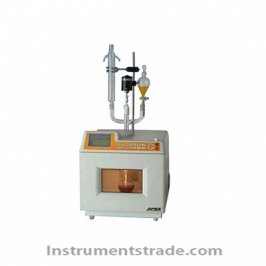
    The HXT-J2LYA Microwave Vacuum Distillation System is a laboratory sample preparation system that combines microwave volumetric heating with vacuum distillation technology. Designed according to relevant national standards, it is used for heating and catalytic reactions of various water samples and is particularly suitable for tritium distillation and extraction from seawater.
    Unlike conventional electric heating mantles and electric furnaces, which transfer heat layer by layer from the outside inward, microwave heating provides direct volumetric heating of the sample. This enables faster heating, improved thermal efficiency, and more uniform processing. The microwave reaction process can also enhance the reaction efficiency of certain reagents.
    The HXT-J2LYA is specifically applicable to GB/T 35570-2017, Determination of Tritium in Seawater—Low-Level Liquid Scintillation Spectrometry, and can be used to perform the distillation and extraction process required for seawater tritium analysis.


    Key Features
    • Rapid microwave heating: Uses volumetric microwave heating for fast and efficient sample preparation.
    • Vacuum distillation: An integrated sealed pipeline system works with a vacuum pump to create reduced-pressure distillation conditions.
    • Wide temperature control: Working temperature can be set within 0–200°C according to different experimental requirements.
    • Efficient condensation and collection: A 300 mm serpentine condenser is used for condensation, while an Erlenmeyer flask collects the distilled product.
    • Integrated PLC control: Intelligent PLC control provides convenient operation and precise control of temperature, microwave power, and processing time.
    • Touchscreen operation: The touchscreen interface displays operating time, temperature, microwave power, and process curves in real time.
    • Magnetic stirring: PTFE-coated magnetic stirrer bars provide adjustable stirring speed and uniform sample mixing.
    • Visual process monitoring: LED illumination and an observation window allow users to monitor the reaction inside the microwave cavity.
    • Optional video monitoring: A color video monitoring system can be configured for real-time observation of the sample reaction process.
    • Multiple safety protections: Multi-stage door interlocks and microwave leakage protection improve operational safety.


    Working Principle
    The HXT-J2LYA uses 2450 MHz microwave energy to heat the sample directly through volumetric microwave heating. Compared with conventional surface heating, microwave energy penetrates the material and generates heat throughout the sample, enabling rapid temperature rise and efficient energy transfer.
    During vacuum distillation, the sample is placed in a sealed multi-neck glass flask. A vacuum pump reduces the internal pressure of the system, lowering the boiling point of volatile components. The heated sample generates vapor, which passes through the condenser and is converted back into liquid for collection.
    The system integrates microwave heating, vacuum control, temperature measurement, magnetic stirring, condensation, and product collection into one system. For seawater tritium analysis, the system can perform the required distillation and extraction process prior to low-level liquid scintillation spectrometry.


    Technical Specifications
    1. Microwave System
    Item Specification
    Rated Microwave Power 800 W
    Microwave Frequency 2450 MHz
    Microwave Output Continuously variable, non-pulsed microwave power output
    Microwave Reaction Chamber Large-volume microwave resonant cavity
    Chamber Material 304 stainless steel, integrated welded construction
    Internal Surface Multi-layer PTFE corrosion-resistant coating
    Internal Chamber Volume Approx. 30 L
    2. Distillation and Functional System
    Item Specification
    Reaction System Sealed reaction system
    Functions Vacuum, atmosphere control, temperature measurement, stirring, condensation and reflux
    Distillation Flask 2000 mL multi-neck glass flask
    Vacuum System Vacuum pump-based negative pressure system
    Condenser 300 mm serpentine condenser
    Distillation Product Collection Erlenmeyer flask
    Temperature Range 0–200°C
    Temperature Measurement Accuracy ±1°C
    Temperature Measurement Fiber-optic temperature measurement
    Stirring Method Magnetic stirring
    Stirrer Material PTFE-coated rotor
    Stirring Speed Adjustable
    3. Process Monitoring
    Item Specification
    Internal Lighting LED spotlight illumination
    Observation Microwave cavity observation window
    Video Monitoring Color video monitoring, optional
    4. Control System
    Item Specification
    Controller PLC programmable control system
    Operation Interface Touchscreen
    Temperature Control Intelligent control
    Microwave Power Control Intelligent control
    Display Information Time, temperature, microwave power
    Process Display Parameter curves and real-time operating information
    5. Safety System
    Item Specification
    Door Safety Multi-stage interlock structure
    Door Protection Power is automatically interrupted when the door is opened
    Door Locking Side-pull locking structure
    Microwave Suppression λ/4 high-impedance microwave leakage suppression structure
    Microwave Leakage <5 mW/cm²
    6. General Specifications
    Item Specification
    Power Supply 220 VAC, 50 Hz
    Total Power Consumption 2000 W
    Main Unit Dimensions Approx. 560 × 505 × 500 mm (W × H × D)
    Top Support Dimensions Approx. 500 mm
    Net Weight 55 kg
     

    Applications
    The HXT-J2LYA Microwave Vacuum Distillation System can be used for:
    • Seawater tritium distillation and extraction
    • Sample preparation for low-level liquid scintillation spectrometry
    • Water sample distillation
    • Microwave-assisted chemical reactions
    • Vacuum distillation of laboratory samples
    • Pretreatment of water samples requiring controlled heating and distillation
    • Laboratory research involving microwave heating and reduced-pressure distillation


    Application Scenario: Seawater Tritium Analysis
    For seawater tritium measurement, the HXT-J2LYA can be integrated into the sample pretreatment workflow before liquid scintillation analysis.
    The system uses microwave heating to rapidly heat the seawater sample while magnetic stirring promotes uniform processing. Vacuum distillation lowers the boiling point and facilitates the separation and collection of the required distillate. The condensed product can then be collected for subsequent low-level liquid scintillation spectrometry.
    This makes the system particularly suitable for laboratories performing seawater tritium analysis in accordance with GB/T 35570-2017.


    Comparison with Conventional Distillation Heating
    Feature HXT-J2LYA Microwave Vacuum Distillation Conventional Electric Heating Distillation
    Heating Method Microwave volumetric heating External conductive heating
    Heating Speed Fast Relatively slow
    Heat Transfer Direct volumetric heating Layer-by-layer heat transfer
    Vacuum Distillation Integrated Usually requires additional equipment
    Temperature Control Intelligent PLC control Depends on heating controller
    Stirring Integrated magnetic stirring May require separate stirrer
    Condensation Integrated condensation system Depends on configuration
    Process Monitoring Touchscreen and observation window Usually manual monitoring
    Automation High
  • FAQ
    1. What is the HXT-J2LYA Microwave Vacuum Distillation System used for?
    It is mainly used for microwave-assisted heating and vacuum distillation of laboratory samples, with a specific application in seawater tritium distillation and extraction.
    2. Can the HXT-J2LYA be used for seawater tritium analysis?
    Yes. The system is designed for the tritium distillation and extraction process used in accordance with GB/T 35570-2017 for the determination of tritium in seawater by low-level liquid scintillation spectrometry.
    3. What is the maximum working temperature?
    The normal working temperature range is 0–200°C, with a temperature measurement accuracy of ±1°C.
    4. What is the microwave power of the system?
    The rated microwave power is 800 W at a frequency of 2450 MHz, with continuously variable non-pulsed microwave power output.
    5. Does the system support vacuum distillation?
    Yes. The sealed distillation system works with a vacuum pump to create a negative-pressure environment for reduced-pressure distillation.
    6. What type of distillation flask is used?
    The system uses a 2000 mL multi-neck glass flask for the distillation process.
    7. How is the distillate collected?
    A 300 mm serpentine condenser is used for condensation, and the condensed distillation product is collected in an Erlenmeyer flask.
    8. How is the sample temperature measured?
    The system uses fiber-optic temperature measurement, which is suitable for microwave heating environments.
    9. Is magnetic stirring available?
    Yes. The system uses a PTFE-coated magnetic rotor with adjustable stirring speed to improve sample uniformity during processing.
    10. What safety measures are provided?
    The system features a multi-stage door interlock, automatic power interruption when the door is opened, a side-pull locking structure, and λ/4 high-impedance microwave suppression technology. Microwave leakage is specified at <5 mW/cm².
    11. Is video monitoring available?
    Yes. A color video monitoring system is available as an optional configuration for observing the sample reaction process inside the microwave cavity.
    12. What are the main advantages over conventional electric heating?
    The main advantages are rapid volumetric heating, improved heating efficiency, integrated vacuum distillation, intelligent temperature and power control, integrated stirring and condensation, and improved process monitoring.

     
Products
Analytical instruments
Physical property test
Environmental monitoring and analysis
Lab general equipment
About us
About this website
Our service
Product purchase
Contact Us

Newsletter

Make Sure you dont miss interesting happenings by joining our newsletter program.

Contact Us
+86-18620722006
instruments@instrumentstrade.com