
Position: Home > > Physical property test > Thermal analysis instrument > Differential scanning calorimeter > HQC-3 Automatic Differential Thermal Analyzer

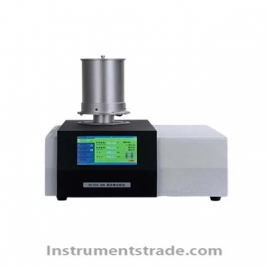
HQC-3 Automatic Differential Thermal Analyzer

Product ID:WLcs007

Price: Please inquire PDF Format
Supply Ability:50SETS/MON
Port:SHENZHEN
  • Product Introduction
  • Other information
  • Model NumberHQC-3
    Brand NameYM
    Payment TermsT/T, paypal,Alibaba.com Pay
    HQC-3 Automatic Differential Thermal Analyzer
     
    Product Introduction
    The HQC-3 Automatic Differential Thermal Analyzer is a high-temperature thermal analysis instrument designed for DTA and DSC-related measurements, thermal characterization, material research, and kinetic analysis. The system integrates automatic furnace control, high-precision temperature measurement, mass flow atmosphere control, automatic data acquisition, and professional thermal analysis software.
    With a maximum temperature of 1450°C, adjustable heating rates, optional vacuum operation, and programmable gas atmosphere control, the HQC-3 supports thermal behavior studies under controlled experimental conditions. Its software provides conventional DTA data processing as well as peak-area, enthalpy, activation-energy, glass-transition-temperature, and specific-heat calculations.


    Performance Features
    • Automatic furnace positioning and control improves measurement accuracy and repeatability.
    • Mass flow controller (MFC) provides precise atmosphere control with fast response and good repeatability.
    •  Two stable gas flows can be switched during experiments; a corrosion-resistant atmosphere control system can be customized.
    •  Automatic measurement and data acquisition, with automatic curve generation and software-based analysis.
    •  Supports DTA peak-area, enthalpy, kinetic parameter, activation energy, glass transition temperature, and specific heat calculations.
    •  Automatic signal-range adjustment during sample measurement helps maintain an appropriate measurement range.
    • Indium, tin, and lead standard samples can be used for temperature and energy calibration.
    •  Large-screen LCD displays instrument status and measurement data in real time.
    • Dual thermocouple configuration provides furnace temperature and sample temperature monitoring.
    • Custom software can be developed according to user-specified calculation formulas and methods.
    •  Optional constant-temperature controller and GC/MS connection head support controlled detection of tar and secondary reaction gases.
    • Optional constant-temperature zone provides temperature control from 0 to 400°C.


    Working Principle
    The HQC-3 measures the thermal response of a sample relative to a reference material while the furnace follows a programmed temperature profile. Differences in thermal behavior are detected by the DTA system and converted into a thermal signal, allowing endothermic and exothermic events to be analyzed.
    During testing, the furnace temperature is precisely controlled while thermocouples monitor the furnace and sample temperatures. The mass flow controller regulates the experimental atmosphere and can switch between gas flows according to the programmed procedure.
    The software automatically records and plots the measurement curve. The resulting DTA/DSC data can then be processed for peak analysis, enthalpy calculation, kinetic analysis, glass transition temperature determination, and other specified calculations.


    Technical Specifications
    Parameter Specification
    Model HQC-3
    DSC Measurement Range ±1 mW to ±100 mW
    DSC Accuracy ±0.1%
    Temperature Range Room temperature to 1450°C
    Temperature Accuracy ±0.1°C
    Heating Rate 0.1–80°C/min
    Vacuum Up to 2.66 × 10⁻² Pa with optional vacuum unit
    Atmosphere Control Mass flow controller; customizable corrosion-resistant gas atmosphere system
    DTA Measurement Range ±10 μV to ±2000 μV
    DTA Resolution 0.01 μV
    DTA Noise <0.01 μV
    Constant Temperature Range 0–400°C
    Display Large-screen LCD
    Temperature Measurement Dual thermocouple system
    Data Processing Automatic curve generation and thermal analysis software


    Application Scenarios
    The HQC-3 Automatic Differential Thermal Analyzer is suitable for:
    •  Thermal stability and thermal behavior studies of materials
    •  DTA and DSC-related laboratory analysis
    •  Phase transition and thermal reaction research
    •  Glass transition temperature analysis
    •  Enthalpy and specific heat measurement
    •  Kinetic parameter and activation energy calculation
    •  Material decomposition and reaction studies
    •  High-temperature material research
    •  Controlled-atmosphere thermal analysis
    •  Research involving tar and secondary reaction gases with optional constant-temperature/GC-MS configurations


    Comparison with Conventional Thermal Analysis Instruments
    Feature HQC-3 Automatic DTA Analyzer Conventional DTA Instrument
    Furnace Control Automatic positioning and control Usually simpler control
    Maximum Temperature Up to 1450°C Depends on configuration
    Atmosphere Control Mass flow controller Basic or optional gas control
    Gas Switching Two stable gas flows May require manual adjustment
    Data Processing Automated + advanced calculations Mainly conventional curve analysis
    Calibration Indium, tin, lead standards Depends on instrument
    Vacuum Down to 2.66 × 10⁻² Pa with optional unit Depends on configuration
    Kinetic Analysis Supported by software May require external software
    Constant-Temperature Module Optional 0–400°C Not normally integrated
    Custom Software Available according to calculation method Usually limited


    FAQ
    1.  What is the maximum operating temperature of the HQC-3?
    The HQC-3 supports temperatures from room temperature up to 1450°C.
    2. What is the heating-rate range?
    The heating rate can be set from 0.1°C/min to 80°C/min.
    3. Does the HQC-3 support controlled gas atmospheres?
    Yes. It uses a mass flow controller for precise atmosphere control and can be customized for corrosive gas environments.
    4. Can the instrument perform vacuum thermal analysis?
    Yes. With the optional vacuum unit, the system can reach 2.66 × 10⁻² Pa.
    5. How is temperature calibration performed?
    Standard samples such as indium, tin, and lead can be used for temperature and energy calibration.
    6. What data can the software calculate?
    The software supports DTA peak-area analysis, enthalpy calculation, kinetic parameters, activation energy, glass transition temperature, specific heat, and data comparison.
    7. Does the analyzer automatically generate thermal analysis curves?
    Yes. The measurement process, data acquisition, and curve generation can be completed automatically.
    8. Can the HQC-3 be connected to GC/MS equipment?
    The system can be configured with a constant-temperature GC/MS connection head and optional constant-temperature zone for related gas detection applications.
    9. Can customized calculation software be provided?
    Yes. According to the user's calculation formula and calculation method, corresponding software can be developed.


  • FAQ
    1.  What is the maximum operating temperature of the HQC-3?
    The HQC-3 supports temperatures from room temperature up to 1450°C.
    2. What is the heating-rate range?
    The heating rate can be set from 0.1°C/min to 80°C/min.
    3. Does the HQC-3 support controlled gas atmospheres?
    Yes. It uses a mass flow controller for precise atmosphere control and can be customized for corrosive gas environments.
    4. Can the instrument perform vacuum thermal analysis?
    Yes. With the optional vacuum unit, the system can reach 2.66 × 10⁻² Pa.
    5. How is temperature calibration performed?
    Standard samples such as indium, tin, and lead can be used for temperature and energy calibration.
    6. What data can the software calculate?
    The software supports DTA peak-area analysis, enthalpy calculation, kinetic parameters, activation energy, glass transition temperature, specific heat, and data comparison.
    7. Does the analyzer automatically generate thermal analysis curves?
    Yes. The measurement process, data acquisition, and curve generation can be completed automatically.
    8. Can the HQC-3 be connected to GC/MS equipment?
    The system can be configured with a constant-temperature GC/MS connection head and optional constant-temperature zone for related gas detection applications.
    9. Can customized calculation software be provided?
    Yes. According to the user's calculation formula and calculation method, corresponding software can be developed.

Products
Analytical instruments
Physical property test
Environmental monitoring and analysis
Lab general equipment
About us
About this website
Our service
Product purchase
Contact Us

Newsletter

Make Sure you dont miss interesting happenings by joining our newsletter program.

Contact Us
+86-18620722006
instruments@instrumentstrade.com