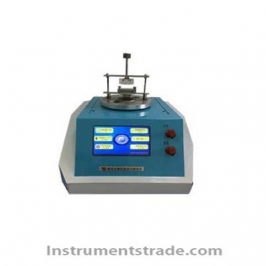
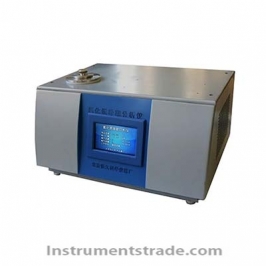
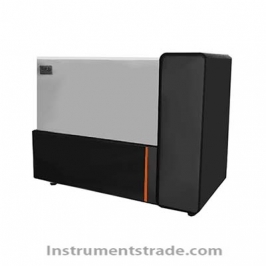
HCDR-P flat plate thermal conductivity meter Introduction: The HCDR-P flat plate thermal conductivity tester is based on the principle of unidirectional stable thermal conductivity. When the upper and lower surfaces of the sample are at different stable temperatures, the thermal flux passing through the effective heat transfer area of the sample and the temperature difference and thickness between the two surfaces of the sample are measured to calculate the thermal conductivity. The core lies in calculating the thermal conductivity by measuring the temperature difference, heat flow rate, and geometric dimensions of the sample on both sides. The flat plate method thermal conductivity meter is a steady-state method thermal conductivity meter designed for building insulation materials, composite materials, multi-layer materials, and porous materials based on the measurement principle of the protective flat plate method. The flat plate method thermal conductivity meter has high measurement accuracy, good temperature control stability, and can automatically apply pressure and measure thickness, meeting the needs of experiments at different temperatures. characteristic: The fully temperature control system adopts an optimized dynamic PID algorithm, which greatly avoids the shortcomings of traditional PID algorithms and improves the stability of temperature control. 2. The power platform adopts a uniform heating structure process, effectively ensuring the uniformity of surface temperature and higher heating efficiency. 3. The sample tank has a one click control function, and both the upper and lower computers can achieve automatic operation of the mechanical structure inside the tank, making the control more convenient. 4. The instrument is equipped with a high-precision laser ranging sensor, which has the function of automatically measuring the thickness of the sample, making the testing more accurate and efficient. 5. The instrument is equipped with a miniature pressure sensor, which can perform precise pressure testing on the sample to meet different testing pressure requirements. 6. It has a friendly human-machine interface and is equipped with a 7-inch LCD touch screen. The entire testing system can be controlled through the touch screen. At the same time, parameters such as cold and hot plate temperature, sample pressure, and thickness can be intuitively observed and displayed on the LCD screen. 7. The software has bidirectional communication function, and any parameters required for sample experiments can be set on the software. The entire experimental process can be completed by operating the software, making the experiment more intelligent. 8. The instrument has a highly automated computer data communication and intelligent analysis and processing system. The software can record the experimental data of the sample in real time and automatically analyze the experimental results after completion. Technical parameters: Thermal conductivity range: 0.0020-2.0000 W/(m · K) Resolution: 0.0001 W/(m · K) Thermal resistance range: 0.02-4 (m2 · K)/W Hot plate temperature range: RT+10-100 ℃ Cold plate temperature range: RT~80 ℃ Temperature control accuracy of hot plate: ± 0.02 ℃ Temperature resolution: 0.01 ℃ Measurement accuracy: ± 3% Repeatability: ± 1% Thickness resolution: 0.01mm Thickness range: 1-50mm automatic measurement Pressure method: automatic pressure Pressure resolution: 0.1Kpa Pressure range: 0-4Kpa, automatically adjustable Sample size: 300mm × 300mm × (5-50mm) Data interface: Standard USB interface Reference standard: GB/T 10294, ASTM C177, ISO 8302
Introduction: The HCDR-P flat plate thermal conductivity tester is based on the principle of unidirectional stable thermal conductivity. When the upper and lower surfaces of the sample are at different stable temperatures, the thermal flux passing through the effective heat transfer area of the sample and the temperature difference and thickness between the two surfaces of the sample are measured to calculate the thermal conductivity. The core lies in calculating the thermal conductivity by measuring the temperature difference, heat flow rate, and geometric dimensions of the sample on both sides. The flat plate method thermal conductivity meter is a steady-state method thermal conductivity meter designed for building insulation materials, composite materials, multi-layer materials, and porous materials based on the measurement principle of the protective flat plate method. The flat plate method thermal conductivity meter has high measurement accuracy, good temperature control stability, and can automatically apply pressure and measure thickness, meeting the needs of experiments at different temperatures.