Position: Home > > Industry specific instrument > Drug testing instrument > Insoluble particles detector > GWJ-8 Insoluble Particle Counter

GWJ-8 Insoluble Particle Counter

Product ID:HZYJbrwl018

Price: Please inquire PDF Format
Supply Ability:50SETS/MON
Port:SHENZHEN
  • Product Introduction
  • Other information
  • Model NumberGWJ-8
    Brand NameSZCHANGLIU
    Payment TermsTT,PAYPAL,Alibaba.com Pay
    GWJ-8 Insoluble Particle Counter
     
    Product Introduction
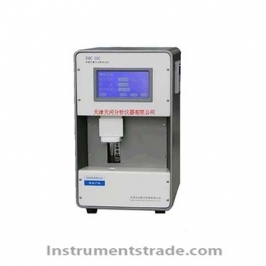
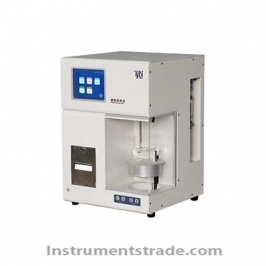
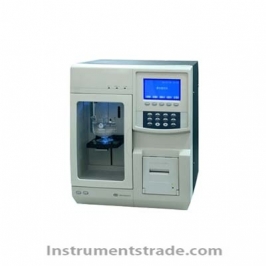
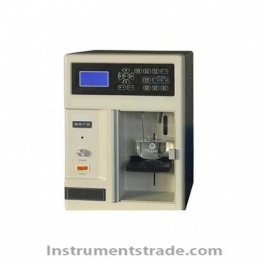
    The GWJ-8 Insoluble Particle Counter is an upgraded model developed from the GWJ-5 particle counter. Using laser light blockage technology and an imported high-brightness laser source, it provides 8-channel particle detection for pharmaceutical and medical device quality control.
    Designed for testing injectable solutions, infusions, high-viscosity liquids, colored samples, organic samples, and medical device extracts, the GWJ-8 supports particle counting and particle size distribution analysis. Its wide detection range and configurable particle size settings make it suitable for routine quality inspection as well as multi-product testing in pharmaceutical research and testing laboratories.
    The instrument features a precision plunger-pump sampling system, high-precision laser sensor, adjustable sampling volume, and a sealed detection chamber. It is designed to support testing requirements associated with the 2015 edition of the Chinese Pharmacopoeia, with built-in testing standards for pharmaceutical injections and medical devices.


    Performance Features
    1. 8-Channel Laser Detection: Uses laser light blockage technology and an imported high-brightness laser source for multi-channel particle analysis.
    2. Wide Particle Detection Range: Measures particle sizes from 1 to 500 μm, with user-configurable size thresholds from 1.2 to 100 μm in 0.1 μm increments.
    3.Pharmacopoeia Testing Support: Includes built-in standards for pharmacopoeia testing, anesthesia-related instruments, and infusion-related devices.
    4.  High Resolution: Resolution exceeds 95% when calibrated according to the 2015 Chinese Pharmacopoeia requirements.
    5. Precision Sampling System: A precision syringe/plunger-pump system provides sampling volume accuracy better than ±1%, with a minimum sampling volume of 0.2 mL.
    6.  Adaptable Sample Handling: Designed to handle different sample viscosities, including high-viscosity liquids, with corrosion-resistant sampling components.
    7. Magnetic Stirring: Uses bottom-mounted magnetic stirring to promote uniform sample mixing while reducing bubble formation.
    8.  Sealed Detection Chamber: Automatic sampling-head lifting and adjustable positioning make sample loading convenient. The chamber accommodates bottled and bagged injections from 1 to 500 mL.
    9. Convenient Maintenance: The sensor is designed for easy cleaning and blockage removal. Different sensor specifications can be replaced as needed.
    10. Touchscreen Operation: A 5.7-inch LCD touchscreen, optional standard keyboard, built-in printer, and RS232 interface support convenient operation and data management.
    11. Wide-Range Power Supply: Operates from 100 to 264 V, helping the instrument tolerate power supply fluctuations without an external voltage stabilizer.


    Working Principle
    The GWJ-8 uses the laser light blockage method, also known as the light obscuration principle. A laser beam passes through the sample flow path. When suspended particles pass through the detection zone, they partially block the light, producing changes in the optical signal.
    The laser sensor converts these changes into electrical signals. The instrument processes the signals to determine particle counts and classify particles according to configured size thresholds. Its 8-channel system supports simultaneous particle classification across multiple size ranges.
    A precision plunger-pump sampling system controls the sample volume and flow rate, while magnetic stirring helps maintain sample uniformity during measurement.


    Technical Parameters
    Parameter Specification
    Optical System Laser light blockage method
    Detection Range 1–500 μm
    Detection Channels 8 channels
    User-Configurable Particle Sizes 1.2–100 μm, adjustable in 0.1 μm increments
    Sampling Volume 0.2–1000 mL
    Sampling Speed 5–85 mL/min
    Test Count Range 0–9,999,999 particles
    Sampling Volume Accuracy <±1%
    Resolution >95% (calibrated according to 2015 Chinese Pharmacopoeia); <10% (calibrated according to USP and ISO 21501)
    Recommended Detection Concentration 0–10,000 particles/mL
    Accuracy ±10% of specified value
    Repeatability RSD <2% (particle concentration >1,000 particles/mL, 5 mL sample volume)
    Display and Operation 5.7-inch LCD touchscreen; optional standard keyboard
    Data Output Built-in printer; RS232 computer interface
    Database Software Data storage and statistical analysis
    Power Supply 100–264 V, 50 Hz ±1%
    Power Consumption <80 W
    Operating Temperature 10–40°C


    Application Scenarios
    •  Pharmaceutical Injection Testing: Detecting insoluble particles in small- and large-volume injections.
    • Infusion Quality Control: Testing particulate contamination in infusion solutions and packaged infusion products.
    • High-Viscosity Liquid Testing: Analyzing particulate matter in viscous pharmaceutical samples.
    •  Colored and Organic Samples: Supporting particle analysis in samples that require specialized optical measurement.
    • Medical Device Testing: Evaluating particulate contamination and filtration performance of medical and infusion-related devices.
    • Pharmaceutical Research Laboratories: Establishing product-specific particle size limits and internal quality control standards.
    •   Quality Inspection Centers: Performing particle counting and size distribution analysis across different sample types.


    Comparison: GWJ-8 vs. Conventional Liquid Particle Testing
    Comparison Item GWJ-8 Conventional Particle Testing
    Detection Technology Laser light blockage Depends on instrument type
    Detection Channels 8 channels Varies by instrument
    Particle Size Range 1–500 μm Depends on instrument
    Size Configuration User-defined thresholds from 1.2–100 μm May offer fixed size thresholds
    Sampling System Precision plunger-pump system Depends on sampling design
    Minimum Sample Volume 0.2 mL Depends on instrument
    Sample Handling Designed for injections, infusions, and high-viscosity samples Sample compatibility varies
    Data Management Internal database, statistical analysis, printing, RS232 Depends on configuration
    Maintenance Sensor cleaning and blockage removal designed for user maintenance Depends on sensor construction


    Frequently Asked Questions
    1. What is the GWJ-8 Insoluble Particle Counter used for?
    It is designed to count and analyze insoluble particles in pharmaceutical injections, infusion solutions, high-viscosity liquids, colored and organic samples, and medical device extracts.
    2. What detection technology does the GWJ-8 use?
    It uses laser light blockage technology. Particles passing through the laser detection zone cause changes in transmitted light, which are processed to determine particle counts and size distribution.
    3. What is the particle size detection range?
    The overall detection range is 1–500 μm. Users can configure particle size thresholds from 1.2 to 100 μm in increments of 0.1 μm.
    4. How many detection channels does the instrument have?
    The GWJ-8 has 8 detection channels for particle classification and analysis.
    5. Can the GWJ-8 test high-viscosity samples?
    Yes. Its precision plunger-pump sampling system is designed to maintain sampling accuracy without being affected by sample viscosity, making it suitable for high-viscosity sample testing.
    6. What is the minimum sampling volume?
    The adjustable sampling volume ranges from 0.2 to 1000 mL, with a minimum sampling volume of 0.2 mL and sampling volume accuracy better than ±1%.
    7. Does the GWJ-8 support Chinese Pharmacopoeia testing?
    The instrument is designed to meet and exceed the stated requirements of the 2015 edition of the Chinese Pharmacopoeia. It also includes built-in testing standards for pharmaceutical and medical device applications. Calibration according to USP and ISO 21501 is also supported.
    8. How does the instrument handle sample mixing?
    It uses bottom-mounted magnetic stirring to help distribute particles uniformly throughout the sample while reducing bubble formation that could affect measurement.
    9. What data management functions are available?
    The GWJ-8 includes database software for data storage and statistical analysis, a built-in printer, and an RS232 interface for computer connection and data transfer.


  • Frequently Asked Questions
    1. What is the GWJ-8 Insoluble Particle Counter used for?
    It is designed to count and analyze insoluble particles in pharmaceutical injections, infusion solutions, high-viscosity liquids, colored and organic samples, and medical device extracts.
    2. What detection technology does the GWJ-8 use?
    It uses laser light blockage technology. Particles passing through the laser detection zone cause changes in transmitted light, which are processed to determine particle counts and size distribution.
    3. What is the particle size detection range?
    The overall detection range is 1–500 μm. Users can configure particle size thresholds from 1.2 to 100 μm in increments of 0.1 μm.
    4. How many detection channels does the instrument have?
    The GWJ-8 has 8 detection channels for particle classification and analysis.
    5. Can the GWJ-8 test high-viscosity samples?
    Yes. Its precision plunger-pump sampling system is designed to maintain sampling accuracy without being affected by sample viscosity, making it suitable for high-viscosity sample testing.
    6. What is the minimum sampling volume?
    The adjustable sampling volume ranges from 0.2 to 1000 mL, with a minimum sampling volume of 0.2 mL and sampling volume accuracy better than ±1%.
    7. Does the GWJ-8 support Chinese Pharmacopoeia testing?
    The instrument is designed to meet and exceed the stated requirements of the 2015 edition of the Chinese Pharmacopoeia. It also includes built-in testing standards for pharmaceutical and medical device applications. Calibration according to USP and ISO 21501 is also supported.
    8. How does the instrument handle sample mixing?
    It uses bottom-mounted magnetic stirring to help distribute particles uniformly throughout the sample while reducing bubble formation that could affect measurement.
    9. What data management functions are available?
    The GWJ-8 includes database software for data storage and statistical analysis, a built-in printer, and an RS232 interface for computer connection and data transfer.
Products
Analytical instruments
Physical property test
Environmental monitoring and analysis
Lab general equipment
About us
About this website
Our service
Product purchase
Contact Us

Newsletter

Make Sure you dont miss interesting happenings by joining our newsletter program.

Contact Us
+86-18620722006
instruments@instrumentstrade.com