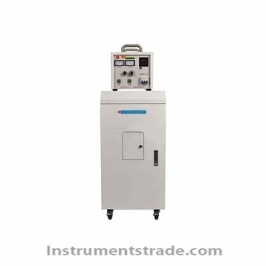
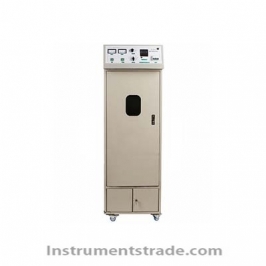
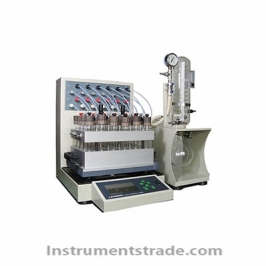
GHX-V Photochemical Reactor

Product ID:SYHChxhc009

Price: Please inquire PDF Format
Supply Ability:50SETS/MON
Port:SHENZHEN
  • Product Introduction
  • Other information
  • Model NumberGHX-V
    Brand NameSHJIAPENG
    Payment TermsTT,PAYPAL,Alibaba.com Pay
    GHX-V Photochemical Reactor
     
    Product Introduction
    The GHX-V Photochemical Reactor is a laboratory instrument designed for photochemical reaction research under ultraviolet and simulated visible-light irradiation. It supports studies involving gaseous or liquid media, static or flowing systems, and photocatalytic reactions using materials such as TiO₂.
    The system helps researchers investigate reaction products and free radicals, determine reaction kinetic constants, and evaluate quantum yields. Equipped with an eight-position rotary reactor, independent magnetic stirring, adjustable light power, interchangeable light sources, and temperature-control accessories, the GHX-V enables parallel experiments under consistent irradiation conditions.
    It is suitable for research in chemical synthesis, environmental protection, photocatalysis, and life sciences.


    Performance Features
    1. Microcomputer Control: Programmable stepwise timing allows researchers to configure experimental procedures and manage reaction durations.
    2. Real-Time Electrical Monitoring: Integrated ammeter and voltmeter display current and voltage changes during operation.
    3.  Multiple Light Sources: Compatible with mercury lamps, xenon lamps, and metal halide lamps, supporting different photochemical irradiation requirements.
    4. Eight-Position Rotary Reactor: The BSZ-8 reactor supports independent stirring of individual reaction tubes while rotating them around the light source to improve irradiation uniformity.
    5.  Adjustable Light Power: The specified power-control range is 100–1200 W, with continuously adjustable output. Compatible lamp ratings depend on the selected configuration.
    6. Advanced Magnetic Stirring: A large LCD display provides temperature, time, and stirring-speed adjustment, with graphical operating indicators.
    7. Temperature-Controlled Quartz Cold Trap: The double-layer quartz cold trap supports circulating cooling water to help maintain suitable reaction temperatures.
    8. Precision Cooling Circulation: A cooling circulator with a cooling capacity above 1000 W supports temperature control from −20°C to 100°C.
    9. Radiation-Shielded Reaction Chamber: Radiation-resistant inner surfaces, an insertable UV shield, and an opening observation door help improve operational protection.
    10.  Flexible Filter Selection: Multiple optical filters, including different UV filter options, allow researchers to select appropriate irradiation conditions.
    11. Convenient Experimental Setup: A drawer-style operating platform, adjustable supports, cooling fan, ventilation openings, and cooling-water connections simplify setup and operation.
    12. Parallel Experiment Efficiency: Processing up to eight samples simultaneously helps increase laboratory throughput and improve experimental consistency.


    Working Principle
    The GHX-V photochemical reactor uses a selected light source to irradiate samples, initiating or accelerating photochemical reactions through the absorption of photons by target compounds or photocatalysts.
    The light source can be configured with suitable optical filters to adjust the irradiation conditions. In photocatalytic experiments, materials such as titanium dioxide (TiO₂) can absorb light and generate reactive species that participate in chemical transformations.
    The eight-position rotary reactor allows individual reaction tubes to be stirred while moving around the light source. This arrangement helps improve light exposure uniformity across samples. Temperature-control accessories regulate reaction conditions, while programmable timing and electrical monitoring support reproducible experimental procedures.
    Researchers can subsequently analyze reaction products and reactive intermediates to study reaction kinetics and quantum yields.


    Technical Parameters
    Parameter Specification
    Model GHX-V
    Product Type Photochemical Reactor
    Power Control Range 100–1200 W, continuously adjustable
    Compatible Mercury Lamps 300 W, 500 W, or 1000 W
    Compatible Xenon Lamps 300 W, 500 W, or 1000 W
    Compatible Metal Halide Lamp 500 W
    Sample Capacity 8 samples simultaneously
    Quartz Reaction Tube Capacity 30 mL, 50 mL, or custom
    Filter Configuration 16 filters
    Dedicated Filter Holders 2
    Light Transmission Through Filters Vertical
    All-Quartz Glass Cold Trap Φ70 × 380 mm
    Glass Reactor Options 250, 500, 1000, 2000, or 3000 mL; one size selected
    Magnetic Stirrer Temperature Range Room temperature to 300°C
    Magnetic Stirrer Timer Up to 999 minutes
    Eight-Position Reactor Stirring Speed 0–1800 rpm, continuously adjustable
    Reactor Rotation Function Available
    Rotation Speed Setting 0–9999 seconds per tube, continuously adjustable, as specified by the manufacturer
    Cooling Capacity >1000 W
    Cooling Temperature Range −20°C to 100°C
    Controller Microcomputer controller with stepwise timing
    Electrical Monitoring Integrated ammeter and voltmeter
    Safety Features Radiation-resistant chamber, UV shield, observation door
    Note: The source specifications also include GHX-IV comparison data. The table above focuses on the GHX-V configuration. Confirm the supplied lamp, filter set, reaction vessel, rotation-speed units, and cooling accessories with the manufacturer before ordering.


    Application Scenarios
    • Photocatalytic Research: Investigation of TiO₂ and other photocatalysts under UV or simulated visible-light irradiation.
    •  Environmental Protection: Research into photodegradation of pollutants and light-driven environmental remediation processes.
    •  Chemical Synthesis: Development and optimization of light-induced chemical reactions.
    • Reaction Kinetics: Evaluation of reaction rates and kinetic constants under controlled irradiation.
    • Quantum Yield Studies: Investigation of the efficiency of photochemical transformations.
    • Free Radical Research: Study of reactive intermediates generated during photochemical reactions.
    • Life Science Research: Investigation of light-induced reactions in relevant biological and biochemical systems.
    • Parallel Reaction Screening: Simultaneous processing of eight samples to compare experimental conditions.


    GHX-V vs. Conventional Photochemical Reactors
    Feature GHX-V Photochemical Reactor Conventional Photochemical Reactors
    Sample Throughput Up to 8 samples simultaneously Depends on model
    Light Sources Mercury, xenon, and metal halide options Depends on configuration
    Light Power Control 100–1200 W specified range Depends on model
    Sample Mixing Independent stirring for each reaction tube Depends on reactor design
    Irradiation Uniformity Rotary movement around the light source Depends on optical arrangement
    Temperature Management Quartz cold trap and cooling circulator Depends on configuration
    Optical Filters Multiple filter options; 16 specified Depends on model
    Reaction Monitoring Programmable timing and electrical readings Depends on control system
    Experimental Flexibility Supports multiple reaction media and configurations Depends on system design


    Frequently Asked Questions
    1. What is the GHX-V photochemical reactor used for?
    It is used for photochemical reaction research, including chemical synthesis, photocatalysis, environmental remediation, reaction kinetics, quantum yield determination, and free radical studies.
    2. How many samples can the GHX-V process simultaneously?
    The eight-position rotary reactor supports parallel processing of up to eight samples.
    3. Which light sources are compatible with the GHX-V?
    The system supports mercury lamps rated at 300 W, 500 W, or 1000 W; xenon lamps with the same listed ratings; and a 500 W metal halide lamp. Confirm the selected configuration when ordering.
    4. Can the light intensity be adjusted?
    The specified power-control range is 100–1200 W with continuous adjustment. Actual operating power depends on the selected lamp and system configuration.
    5. How does the rotary reactor improve experiments?
    Each reaction tube has independent stirring and can rotate around the light source, helping improve irradiation uniformity and consistency between samples.
    6. Can the GHX-V be used for TiO₂ photocatalysis?
    Yes. It is designed to support photochemical studies involving reaction vessels loaded with photocatalysts such as TiO₂, subject to the selected reactor and experimental setup.
    7. What temperature-control capabilities are available?
    The cooling circulator has a specified temperature range of −20°C to 100°C and a cooling capacity above 1000 W. The magnetic stirrer separately lists a temperature range from room temperature to 300°C.
    8. What reaction vessel sizes are available?
    Quartz reaction tubes are available in 30 mL and 50 mL sizes, with custom options. Glass reactor vessels are listed in capacities of 250, 500, 1000, 2000, and 3000 mL, with one size selected.
    9. What safety features does the GHX-V include?
    The system features a radiation-resistant reaction chamber, an insertable UV shield, an opening observation door, a cooling fan, and ventilation openings. Appropriate laboratory PPE and operating procedures remain necessary.


  • Frequently Asked Questions
    1. What is the GHX-V photochemical reactor used for?
    It is used for photochemical reaction research, including chemical synthesis, photocatalysis, environmental remediation, reaction kinetics, quantum yield determination, and free radical studies.
    2. How many samples can the GHX-V process simultaneously?
    The eight-position rotary reactor supports parallel processing of up to eight samples.
    3. Which light sources are compatible with the GHX-V?
    The system supports mercury lamps rated at 300 W, 500 W, or 1000 W; xenon lamps with the same listed ratings; and a 500 W metal halide lamp. Confirm the selected configuration when ordering.
    4. Can the light intensity be adjusted?
    The specified power-control range is 100–1200 W with continuous adjustment. Actual operating power depends on the selected lamp and system configuration.
    5. How does the rotary reactor improve experiments?
    Each reaction tube has independent stirring and can rotate around the light source, helping improve irradiation uniformity and consistency between samples.
    6. Can the GHX-V be used for TiO₂ photocatalysis?
    Yes. It is designed to support photochemical studies involving reaction vessels loaded with photocatalysts such as TiO₂, subject to the selected reactor and experimental setup.
    7. What temperature-control capabilities are available?
    The cooling circulator has a specified temperature range of −20°C to 100°C and a cooling capacity above 1000 W. The magnetic stirrer separately lists a temperature range from room temperature to 300°C.
    8. What reaction vessel sizes are available?
    Quartz reaction tubes are available in 30 mL and 50 mL sizes, with custom options. Glass reactor vessels are listed in capacities of 250, 500, 1000, 2000, and 3000 mL, with one size selected.
    9. What safety features does the GHX-V include?
    The system features a radiation-resistant reaction chamber, an insertable UV shield, an opening observation door, a cooling fan, and ventilation openings. Appropriate laboratory PPE and operating procedures remain necessary.
Products
Analytical instruments
Physical property test
Environmental monitoring and analysis
Lab general equipment
About us
About this website
Our service
Product purchase
Contact Us

Newsletter

Make Sure you dont miss interesting happenings by joining our newsletter program.

Contact Us
+86-18620722006
instruments@instrumentstrade.com