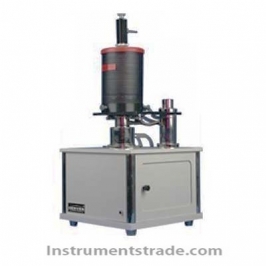
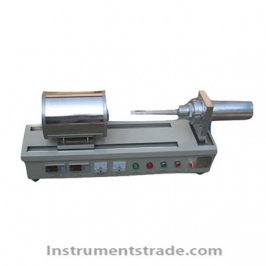
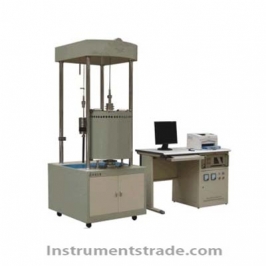
GHC-II Solid Material High Temperature Specific Heat Capacity Tester Introduction: The high-temperature specific heat testing system is based on mixed method testing and uses modern computer testing technology to automatically test the specific heat capacity of solid materials at different temperatures. Widely used in scientific research and teaching for testing and researching the specific heat capacity of solid materials. The system consists of a tubular vertical resistance furnace (with resistance wire heating at 1000 degrees, molybdenum wire heating at 1700 degrees, and graphite furnace tube heating above 1700 degrees), a thermostat, temperature controller, high-precision thermometer, calorimeter, computer testing system, etc. During the experiment, the sample is first heated to the experimental temperature in a tubular heating furnace, and then dropped into a calorimeter. The temperature changes of the sample and calorimeter are collected by a computer measurement system throughout the process. Finally, determine the specific heat capacity of the material. A vacuum system is required for samples that are prone to oxidation at high temperatures. Technical parameters: Temperature range: Room temperature -1400 ℃. Temperature control accuracy: ± 0.3K/30 minutes (depending on the setting) Temperature measurement resolution: 0.01K Heating method: Resistance wire (or molybdenum wire). Adopting intelligent PID regulation and program control. Computer data collection throughout the entire process. Vacuum degree can reach: calorimeter: less than 2 * 10-3 Pa. Heater: less than 5 Pa (depending on the sample), conventional: -0.1 Mpa Test software Windows XP operating environment, Chinese operating interface Sample size: diameter: 11mm, height: 30mm, powder sample with standard sample box. The testing principle meets military standards: GJB330A-2000, GJB1715-93
Introduction: The high-temperature specific heat testing system is based on mixed method testing and uses modern computer testing technology to automatically test the specific heat capacity of solid materials at different temperatures. Widely used in scientific research and teaching for testing and researching the specific heat capacity of solid materials. The system consists of a tubular vertical resistance furnace (with resistance wire heating at 1000 degrees, molybdenum wire heating at 1700 degrees, and graphite furnace tube heating above 1700 degrees), a thermostat, temperature controller, high-precision thermometer, calorimeter, computer testing system, etc. During the experiment, the sample is first heated to the experimental temperature in a tubular heating furnace, and then dropped into a calorimeter. The temperature changes of the sample and calorimeter are collected by a computer measurement system throughout the process. Finally, determine the specific heat capacity of the material. A vacuum system is required for samples that are prone to oxidation at high temperatures.