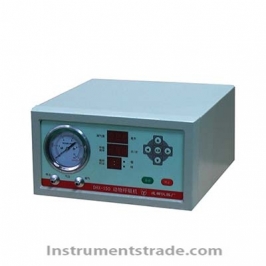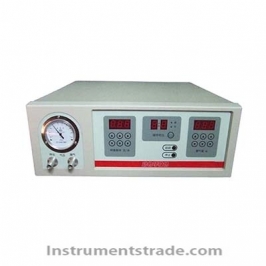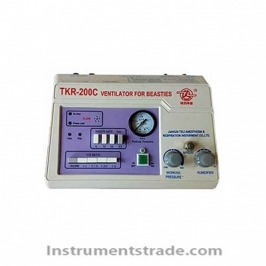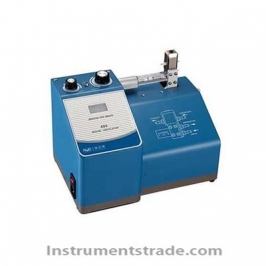
DHX Series Animal Ventilator

Product ID:SHDWhxj008

Price: Please inquire PDF Format
Supply Ability:50SETS/MON
Port:SHENZHEN
  • Product Introduction
  • Other information
  • Model NumberDHX
    Brand NameCDYIQI
    Payment TermsTT,PAYPAL,Alibaba.com Pay
    DHX Series Animal Ventilator
     
    Product Introduction
    The DHX Series Animal Ventilator is a laboratory biological function testing device designed to provide controlled respiratory support for experimental animals that cannot breathe spontaneously due to anesthesia or thoracotomy.
    This animal ventilator uses a stepper motor-driven, volume-controlled positive-pressure ventilation system. A microcomputer automatically controls the delivery of air into the respiratory tract according to preset respiratory frequency and tidal volume, helping expand the lungs and maintain gas exchange during biological function experiments.
    Using ambient air as the gas source, the DHX Series does not require a high-pressure gas supply. Tidal volume can be precisely adjusted and displayed in real time, with an adjustment accuracy of 1 mL. Respiratory parameters can also be changed during operation, and the newly set values take effect after pressing the start/stop button.


    Performance Features
    •  Volume-Controlled Positive-Pressure Ventilation: Delivers a preset volume of air to the respiratory tract.
    •  Stepper Motor Drive: Provides stable and precise mechanical ventilation.
    •  Microcomputer Control: Automatically controls respiratory frequency and tidal volume.
    •  Adjustable Tidal Volume: Available ranges of 1–50 mL, 1–150 mL and 1–300 mL.
    •  Precise Volume Adjustment: Tidal volume adjustment resolution reaches 1 mL.
    •  Real-Time Display: Displays the current tidal volume during operation.
    •  Adjustable Respiratory Rate: 1–199 breaths/min.
    •  Multiple I:E Ratios: 1:1, 1:2, 1:3 and 2:1.
    •  No High-Pressure Gas Required: Uses air as the gas source for convenient laboratory operation.
    •  Parameter Adjustment During Operation: Respiratory frequency and other working parameters can be changed as required.
    •  Power-Off Setting Retention: Retains the current operating settings after power interruption.
    •  Wide Animal Compatibility: Suitable for various laboratory animals from rodents to larger experimental animals.


    Working Principle
    The DHX Series Animal Ventilator operates as a positive-pressure, volume-controlled ventilator. A stepper motor drives the ventilation mechanism while the microcomputer controls the preset tidal volume, respiratory frequency and inspiratory/expiratory ratio.
    During ventilation, air is delivered into the animal's airway at the programmed tidal volume and frequency, causing lung expansion and supporting gas exchange. The operator can adjust the respiratory parameters according to the experimental requirements.
    The system uses ambient air rather than a high-pressure gas source, making it convenient for laboratory animal respiratory support during anesthesia or open-chest experiments.


    Technical Parameters
    Parameter Specification
    Series DHX Series
    Ventilation Type Volume-controlled positive-pressure ventilation
    Drive System Stepper motor
    Control System Microcomputer control
    Gas Source Ambient air
    Tidal Volume 1–50 mL / 1–150 mL / 1–300 mL
    Tidal Volume Adjustment 1 mL
    Respiratory Rate 1–199 breaths/min
    I:E Ratio 1:1, 1:2, 1:3, 2:1
    Power Supply 220V ±10%, 50Hz
    Main Unit Dimensions 400 × 140 × 280 mm
    Applicable Animals Rats, guinea pigs, hamsters, rabbits, cats, monkeys, dogs, etc.


    Application Scenarios
    The DHX Series Animal Ventilator is designed for laboratory animal biological function experiments and respiratory support applications, including:
    •  Animal Anesthesia Experiments – Provides controlled ventilation when spontaneous breathing is suppressed by anesthesia.
    •  Thoracotomy Experiments – Supports respiration during open-chest animal experiments.
    • Respiratory Physiology Research – Provides controlled respiratory parameters for physiological studies.
    • Pharmacological Research – Supports animal experiments involving anesthesia and respiratory intervention.
    •  Preclinical Research – Provides mechanical ventilation for laboratory animals under experimental conditions.
    •  Animal Biological Function Testing – Suitable for controlled respiratory support during physiological experiments.
    Applicable experimental animals include rats, guinea pigs, hamsters, rabbits, cats, monkeys and dogs.


    DHX Series vs. Conventional Manual Animal Ventilation
    Feature DHX Series Animal Ventilator Manual/Basic Ventilation
    Ventilation Mode Positive-pressure, volume-controlled Manually controlled
    Drive Stepper motor Manual or basic mechanical drive
    Control Microcomputer Manual adjustment
    Tidal Volume Precisely adjustable Less consistent
    Volume Resolution 1 mL Depends on operator/system
    Respiratory Rate 1–199 breaths/min Manual/limited
    I:E Ratio 4 selectable ratios May require manual adjustment
    Real-Time Tidal Volume Display Yes Typically unavailable
    Gas Source Ambient air Depends on system
    Parameter Adjustment Can be changed during operation More operator dependent
    Power-Off Setting Retention Yes Depends on equipment


    FAQ
    1. What is the DHX Series Animal Ventilator used for?
    It is used to provide controlled mechanical ventilation for laboratory animals that cannot breathe spontaneously, such as during anesthesia or thoracotomy experiments.
    2. What type of ventilation does the DHX Series use?
    It uses volume-controlled positive-pressure ventilation, with air delivered to the animal's airway at a preset tidal volume and frequency.
    3. What animals can be used with this ventilator?
    It is suitable for rats, guinea pigs, hamsters, rabbits, cats, monkeys, dogs and other experimental animals.
    4. What is the tidal volume range?
    Three selectable ranges are available: 1–50 mL, 1–150 mL and 1–300 mL, with 1 mL adjustment precision.
    5. Can the respiratory rate be adjusted?
    Yes. The respiratory rate can be adjusted from 1 to 199 breaths/min.
    6. What I:E ratios are available?
    The DHX Series provides four selectable ratios: 1:1, 1:2, 1:3 and 2:1.
    7. Does the ventilator require a high-pressure gas source?
    No. It uses ambient air as the gas source, so an external high-pressure gas supply is not required.
    8. Can ventilation parameters be changed during an experiment?
    Yes. Parameters such as respiratory frequency and respiratory ratio can be changed during operation. The newly set parameters take effect after the start/stop button is operated.
    9. Does the instrument retain settings after a power failure?
    Yes. The ventilator retains the current operating settings when power is interrupted.
     
  • FAQ
    1. What is the DHX Series Animal Ventilator used for?
    It is used to provide controlled mechanical ventilation for laboratory animals that cannot breathe spontaneously, such as during anesthesia or thoracotomy experiments.
    2. What type of ventilation does the DHX Series use?
    It uses volume-controlled positive-pressure ventilation, with air delivered to the animal's airway at a preset tidal volume and frequency.
    3. What animals can be used with this ventilator?
    It is suitable for rats, guinea pigs, hamsters, rabbits, cats, monkeys, dogs and other experimental animals.
    4. What is the tidal volume range?
    Three selectable ranges are available: 1–50 mL, 1–150 mL and 1–300 mL, with 1 mL adjustment precision.
    5. Can the respiratory rate be adjusted?
    Yes. The respiratory rate can be adjusted from 1 to 199 breaths/min.
    6. What I:E ratios are available?
    The DHX Series provides four selectable ratios: 1:1, 1:2, 1:3 and 2:1.
    7. Does the ventilator require a high-pressure gas source?
    No. It uses ambient air as the gas source, so an external high-pressure gas supply is not required.
    8. Can ventilation parameters be changed during an experiment?
    Yes. Parameters such as respiratory frequency and respiratory ratio can be changed during operation. The newly set parameters take effect after the start/stop button is operated.
    9. Does the instrument retain settings after a power failure?
    Yes. The ventilator retains the current operating settings when power is interrupted.
Products
Analytical instruments
Physical property test
Environmental monitoring and analysis
Lab general equipment
About us
About this website
Our service
Product purchase
Contact Us

Newsletter

Make Sure you dont miss interesting happenings by joining our newsletter program.

Contact Us
+86-18620722006
instruments@instrumentstrade.com