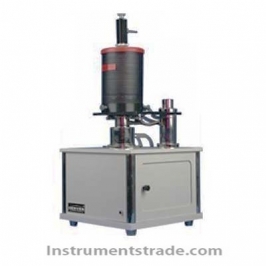
DHC-211 Low Temperature Specific Heat Testing System Introduction: The low-temperature specific heat testing system is based on the basic method of specific heat definition: steady-state adiabatic pulse method. This system consists of a thermostat, temperature controller, high-precision thermometer, CVM-200 electrical transport property tester, intelligent time relay, etc. During the experiment, immerse the lower part of the thermostat vacuum sleeve in liquid nitrogen. If liquid nitrogen is used for experiments below -190 ℃, the 8mm hole on the cover plate of the Dewar needs to be blocked with a solid plug, and then the liquid nitrogen in the Dewar needs to be depressurized using a mechanical vacuum pump from the outlet on the Dewar cover plate to obtain a sample temperature below -190 ℃. This thermostat adopts a combination of high vacuum insulation, adjustable solid leakage heat, and electric heating to achieve variable temperature control. This measurement system is a multifunctional measurement system. It is easy to replace a small number of core components for thermal conductivity measurement, and even variable temperature electromagnetic measurement (requiring the purchase of electromagnetic measurement constant temperature blocks and AC magnetic susceptibility coils separately) experiments, achieving multi functionality on one machine. The method of controlling the cooling capacity of its thermostat is to adjust the solid thermal contact, and the heating heat comes from the heat transferred from the room temperature along the rod and the electric heating provided by the temperature controller. Technical parameters: Temperature range: 90K-300K, 65K-100K; Temperature control accuracy: ± 0.3K/30 minutes Minimum temperature measurement resolution: 0.01K; Heating method: timed constant current;
Introduction: The low-temperature specific heat testing system is based on the basic method of specific heat definition: steady-state adiabatic pulse method. This system consists of a thermostat, temperature controller, high-precision thermometer, CVM-200 electrical transport property tester, intelligent time relay, etc. During the experiment, immerse the lower part of the thermostat vacuum sleeve in liquid nitrogen. If liquid nitrogen is used for experiments below -190 ℃, the 8mm hole on the cover plate of the Dewar needs to be blocked with a solid plug, and then the liquid nitrogen in the Dewar needs to be depressurized using a mechanical vacuum pump from the outlet on the Dewar cover plate to obtain a sample temperature below -190 ℃. This thermostat adopts a combination of high vacuum insulation, adjustable solid leakage heat, and electric heating to achieve variable temperature control. This measurement system is a multifunctional measurement system. It is easy to replace a small number of core components for thermal conductivity measurement, and even variable temperature electromagnetic measurement (requiring the purchase of electromagnetic measurement constant temperature blocks and AC magnetic susceptibility coils separately) experiments, achieving multi functionality on one machine. The method of controlling the cooling capacity of its thermostat is to adjust the solid thermal contact, and the heating heat comes from the heat transferred from the room temperature along the rod and the electric heating provided by the temperature controller.