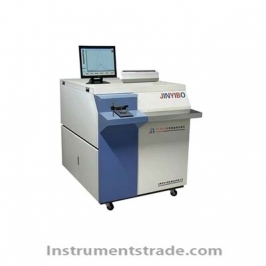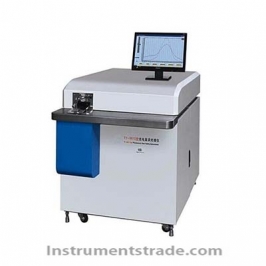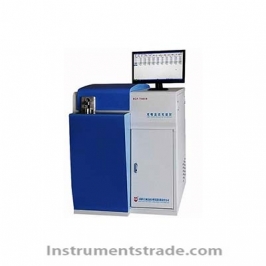
Position: Home > > Analytical instruments > Spectroscopy Equipment > photoelectric direct reading spectrometer > CX-9900 Portable Direct-Reading Optical Emission Spectrometer

CX-9900 Portable Direct-Reading Optical Emission Spectrometer

Product ID:FGgdzd033

Price: Please inquire PDF Format
Supply Ability:50 SETS/MON
Port:SHENZHEN
  • Product Introduction
  • Other information
  • Model NumberCX-9900
    Brand NameWXCHUANGXIANG
    Payment TermsTT,PAYPAL,Alibaba.com Pay
    CX-9900 Portable Direct-Reading Optical Emission Spectrometer
     
    Product Introduction
    The CX-9900 Portable Optical Emission Spectrometer is designed for on-site metal alloy identification, elemental composition analysis, and material quality control. Featuring a laboratory-derived Paschen–Runge optical system adapted for portable use, it combines full-spectrum CCD detection, a high-performance digital spark source, and intelligent calibration technology in a compact, rugged instrument.
    With a stated spectral coverage extending from the ultraviolet to the visible region, the CX-9900 supports analysis of major alloying elements and selected trace elements in iron-, aluminum-, copper-, zinc-, nickel-, magnesium-, and lead-based materials. Interchangeable spark and arc excitation options support accurate alloy analysis as well as rapid material identification and sorting.
    Its portable design, optional battery pack, flexible sample fixtures, and intuitive Windows-based software make it suitable for field testing, incoming material inspection, metal recycling, and analysis of large metal components that are difficult to cut or transport to a laboratory.


    Performance Features
    • Laboratory-Grade Optical System: Uses a Paschen–Runge configuration with a 350 mm Rowland circle radius, adapted for portable operation.
    • Full-Spectrum CCD Detection: Multiple high-performance linear-array sensors cover the specified analytical wavelength ranges for multi-element analysis.
    • Dual Excitation Options: Supports spark excitation for quantitative alloy analysis, including carbon, and arc excitation for material identification and sorting.
    • Specialized Trace Element Analysis: An optional dedicated optical system supports analysis of phosphorus, sulfur, boron, tin, and arsenic in steel.
    • Rapid Source Switching: Plug-in interfaces enable convenient conversion between spark and arc excitation.
    •  Tool-Free Electrode and Fixture Replacement: Accommodates samples of different shapes and sizes, including pipes, wires, and small specimens.
    •  ICAL Intelligent Calibration: Helps compensate for environmental changes and reduces the need for recalibration when the measurement location or temperature changes.
    •  APF Automatic Program Selection: Automatically identifies the sample matrix and selects a suitable analytical program to streamline unknown-alloy testing.
    • Optional Battery Power: The optional battery pack supports hundreds of excitations per charge, depending on operating conditions.
    •  Portable Trolley Design: An integrated trolley improves mobility and operating convenience, with a separable design for transportation.
    •  Expandable Analytical Programs: New analytical matrices and elements can be added through software updates without necessarily changing the hardware.
    •  Multiple Interfaces: Supports USB, printer, display, and network connectivity for data management and reporting.


    Working Principle
    The CX-9900 uses optical emission spectrometry (OES) to determine the elemental composition of metals and alloys.
    First, the sample surface is prepared to provide a clean, representative analytical area. The instrument applies spark or arc excitation to the sample, generating a plasma in which the sample's constituent elements are excited. As excited atoms and ions return to lower energy states, they emit light at characteristic wavelengths.
    The Paschen–Runge optical system separates the emitted light by wavelength, and the CCD detector arrays record the resulting spectral signals. The software identifies characteristic emission lines and calculates elemental concentrations using the appropriate calibration curves and analytical programs.
    The APF software can assist with sample matrix identification and analytical program selection, while ICAL supports instrument calibration stability. Together, these functions enable rapid alloy identification, quantitative composition analysis, and material sorting in laboratory or field environments.


    Technical Parameters
    Parameter Specification
    Model CX-9900
    Instrument Type Portable Direct-Reading Optical Emission Spectrometer
    Optical Configuration Paschen–Runge
    Rowland Circle Radius 350 mm
    Wavelength Range 170–200 nm and 200–650 nm, as listed
    Detector Multiple high-performance linear-array CCD sensors
    Pixel Resolution 20 pm (as specified)
    Spectral Coverage Full-spectrum coverage for the configured elemental analysis range
    Excitation Source HEPS digital spark source
    Excitation Frequency 100–1,000 Hz
    Current 1–80 A
    Excitation Voltage >8,000 V
    Supported Metal Matrices Iron, aluminum, copper, zinc, nickel, magnesium, lead, and others, depending on calibration
    Main Unit Dimensions (L × W × H) 600 × 345 × 345 mm
    Main Unit Weight 25 kg
    Standby Temperature 0°C to 40°C
    Operating Temperature 10°C to 40°C
    Thermal Performance Temperature rise at the excitation stand no more than 5°C after 100 consecutive excitations, as specified
    Relative Humidity <85%
    Power Supply AC 220 V, 50 Hz
    Power Consumption 300 W during excitation; 100 W in standby
    Argon Purity 99.999%
    Argon Consumption Reduced by the spray-electrode technology; exact flow rate not specified
    Communication Interfaces USB, printer, display, and network interfaces
    Optional Power Supply Battery pack
    Note: Confirm the exact wavelength coverage, the meaning of the 20 pm pixel resolution, the supported elements for each alloy matrix, and the availability of battery-powered operation with the manufacturer. Analytical performance depends on the selected calibration program, sample preparation, and excitation configuration.


    Application Scenarios
    • Incoming Material Inspection: Verifies alloy grades and elemental composition before production.
    • Metal Manufacturing and Quality Control: Supports alloy verification, product inspection, and composition control.
    • Petrochemical Equipment Inspection: Identifies the composition of metal components used in pipelines, pressure equipment, and industrial structures.
    • Scrap Metal Recycling: Enables rapid alloy identification and sorting to improve material classification.
    •  Large Metal Component Testing: Supports on-site analysis of components that are difficult to cut, remove, or transport to a laboratory.
    • Steel and Alloy Analysis: Measures alloying elements and selected trace elements according to the configured analytical program.
    •  Non-Ferrous Metal Analysis: Supports testing of aluminum-, copper-, zinc-, nickel-, magnesium-, and lead-based alloys.
    • Field Material Verification: Provides portable elemental analysis for maintenance, inspection, and material identification teams.


    Comparison: CX-9900 Portable OES vs. Laboratory OES vs. Handheld XRF
    Comparison Factor CX-9900 Portable OES Laboratory OES Handheld XRF Analyzer
    Primary Use On-site metal analysis and alloy identification Laboratory-based elemental analysis Rapid field alloy identification
    Excitation or Detection Method Spark/arc optical emission Optical emission, typically spark-based X-ray fluorescence
    Carbon Analysis Supported by spark excitation when properly configured and calibrated Commonly supported for suitable metal matrices Generally not suitable for direct carbon determination
    Sample Accessibility Can test large components on-site with suitable surface preparation Often requires samples to be brought to the laboratory Convenient handheld access
    Portability Portable unit, approximately 25 kg Typically stationary Highly portable handheld format
    Alloy Sorting Supports grade identification and composition analysis Supports detailed composition analysis Supports rapid alloy screening
    Trace Element Capability Depends on the analytical program and configured optical system Depends on the instrument and calibration Varies by element and alloy matrix
    Typical Applications Field inspection, recycling, incoming material control High-throughput laboratory testing and quality assurance Rapid, nondestructive field screening


    Frequently Asked Questions (FAQ)
    Q1: What is the CX-9900 portable optical emission spectrometer used for?
    It is used for on-site alloy identification, metal composition analysis, incoming material inspection, and scrap metal sorting.
    Q2: Which metals can the CX-9900 analyze?
    The listed matrices include iron-, aluminum-, copper-, zinc-, nickel-, magnesium-, and lead-based materials. Actual element coverage depends on the analytical program and calibration.
    Q3: Can the CX-9900 measure carbon in steel?
    Yes. Its spark excitation configuration is specified for accurate alloy analysis, including carbon, subject to the applicable calibration and analytical range.
    Q4: What is the difference between spark and arc excitation?
    Spark excitation is intended for quantitative elemental analysis, while arc excitation is primarily used for material identification and grade sorting. The appropriate mode depends on the sample and testing objective.
    Q5: Can it analyze phosphorus and sulfur in steel?
    A specially designed optical system is available for analyzing phosphorus, sulfur, boron, tin, and arsenic in steel. Confirm the applicable configuration and detection limits before purchase.
    Q6: Can the CX-9900 analyze large metal structures without cutting them?
    It is designed for on-site analysis of large components that are difficult to cut or transport. The selected test area must be accessible and properly prepared for reliable excitation.
    Q7: Does the instrument support battery operation?
    An optional battery pack is specified and can support hundreds of excitations per charge, depending on operating conditions. Confirm battery availability and configuration with the supplier.
    Q8: What is ICAL intelligent calibration?
    ICAL is an intelligent calibration logic system designed to maintain analytical stability as environmental conditions change, helping reduce the need for recalibration when the location or temperature changes.
    Q9: Can new elements or alloy grades be added?
    The analytical program is expandable. Supported matrices and elements may be added through software updates where the existing hardware and optical configuration provide the necessary measurement capability.

     
  • Frequently Asked Questions (FAQ)
    Q1: What is the CX-9900 portable optical emission spectrometer used for?
    It is used for on-site alloy identification, metal composition analysis, incoming material inspection, and scrap metal sorting.
    Q2: Which metals can the CX-9900 analyze?
    The listed matrices include iron-, aluminum-, copper-, zinc-, nickel-, magnesium-, and lead-based materials. Actual element coverage depends on the analytical program and calibration.
    Q3: Can the CX-9900 measure carbon in steel?
    Yes. Its spark excitation configuration is specified for accurate alloy analysis, including carbon, subject to the applicable calibration and analytical range.
    Q4: What is the difference between spark and arc excitation?
    Spark excitation is intended for quantitative elemental analysis, while arc excitation is primarily used for material identification and grade sorting. The appropriate mode depends on the sample and testing objective.
    Q5: Can it analyze phosphorus and sulfur in steel?
    A specially designed optical system is available for analyzing phosphorus, sulfur, boron, tin, and arsenic in steel. Confirm the applicable configuration and detection limits before purchase.
    Q6: Can the CX-9900 analyze large metal structures without cutting them?
    It is designed for on-site analysis of large components that are difficult to cut or transport. The selected test area must be accessible and properly prepared for reliable excitation.
    Q7: Does the instrument support battery operation?
    An optional battery pack is specified and can support hundreds of excitations per charge, depending on operating conditions. Confirm battery availability and configuration with the supplier.
    Q8: What is ICAL intelligent calibration?
    ICAL is an intelligent calibration logic system designed to maintain analytical stability as environmental conditions change, helping reduce the need for recalibration when the location or temperature changes.
    Q9: Can new elements or alloy grades be added?
    The analytical program is expandable. Supported matrices and elements may be added through software updates where the existing hardware and optical configuration provide the necessary measurement capability.


Products
Analytical instruments
Physical property test
Environmental monitoring and analysis
Lab general equipment
About us
About this website
Our service
Product purchase
Contact Us

Newsletter

Make Sure you dont miss interesting happenings by joining our newsletter program.

Contact Us
+86-18620722006
instruments@instrumentstrade.com