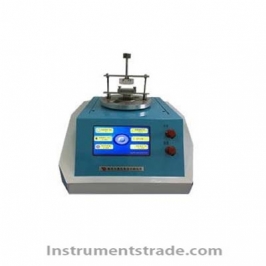
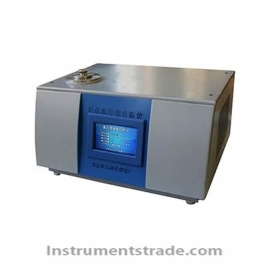
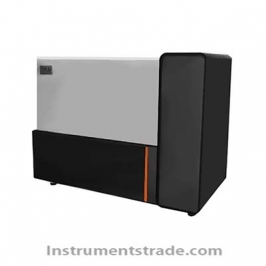
CTM steady-state thermal conductivity tester Introduction: The thermal conductivity tester uses a small low-temperature refrigerator as the cooling source, without the need for liquid nitrogen/helium, providing a temperature environment of 73K-373K for the testing system. Based on steady-state method, measure the thermal conductivity (thermal conductivity) of solid materials. characteristic: Measure the thermal conductivity (thermal conductivity) of solid materials at low temperatures on a low-temperature platform with a single or multiple refrigeration units as the cooling source. Continuously control the temperature continuously within the testing temperature range and conduct continuous measurements to obtain accurate high-density data; The system adapts to the measurement process and is suitable for studying the physical properties of new materials; Flexible sample size, suitable for measuring samples of different sizes; Fully automated measurement process, easy to operate; The low-temperature platform is designed to be too separated from the measurement sample, making the process of replacing the test sample faster and more convenient. Use specialized sample installation tools to safely, conveniently, and quickly install samples onto the sample holder. Technical parameters: Physical property measurement: Thermal conductivity of solid materials (thermal conductivity) Measurement principle: steady-state method Temperature range: 73K-373K (-200 ℃ -100 ℃) Measurement range: 0.01w/mk -800 w/mk Measurement accuracy: ≤ 5% Measurement repeatability: ≤ 5% Sample size: 8 × 8 × 2mm (0.1-0.5W/mk) 6×5×5mm (0.5-5W/mk) 20×20×5mm (5.0-20W/mk) 40×4×1mm (≥20W/mk) Test materials: metal materials, ceramic materials, polymer materials (except foam thermal insulation materials) Low temperature technology: using a small low-temperature refrigeration unit as the cooling source, without the need to consume liquid nitrogen/helium Application areas: Engineering Thermophysics, Materials Science, Solid State Physics and Energy, Environmental Protection, etc
Introduction: The thermal conductivity tester uses a small low-temperature refrigerator as the cooling source, without the need for liquid nitrogen/helium, providing a temperature environment of 73K-373K for the testing system. Based on steady-state method, measure the thermal conductivity (thermal conductivity) of solid materials.