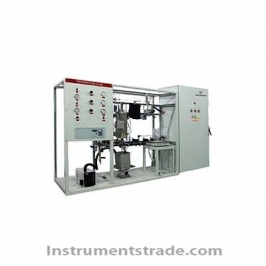
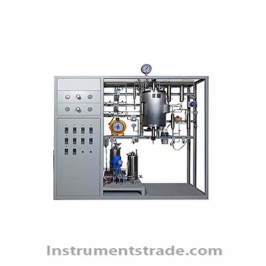
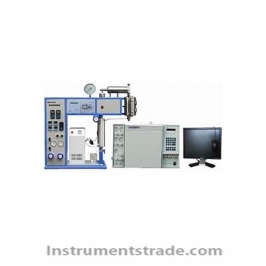
CO2 hydrogenation catalyst evaluation device Introduction: The CO2 hydrogenation catalyst evaluation device is a set of fixed bed catalyst evaluation devices used for researching and developing CO2 hydrogenation catalysts. By accurately controlling the ratio of CO2 and H2 and entering the fixed bed reactor for reaction, the products are directly analyzed online by GC, GC-MS and other analyzers. The instrument can be used for studying catalyst reaction mechanisms, reaction kinetics, and other related fields. This device adopts a fully automated control scheme, which precisely controls reaction conditions such as temperature, flow rate, and pressure through computers, and uses online data monitoring and management to record the reaction process and results. The operation is very convenient and can greatly reduce the workload of engineers and scientists in experiments. characteristic: 1. The gas flow rate is controlled by a mass flow controller, which can accurately mix different concentrations of mixed gas; 2. The reactor adopts a high-temperature and high-pressure quartz fixed bed reactor, which can eliminate the influence of the catalytic activity of the metal reactor itself on the reaction; 3. Adopting a high-temperature resistant pressure regulating control valve can achieve online full component analysis of the product, reducing component errors caused by the product separation process; Technical parameters: Catalyst quantity: 0.5~2mL Operating temperature: RT~700 ℃ Operating pressure: 3~5MPa
Introduction: The CO2 hydrogenation catalyst evaluation device is a set of fixed bed catalyst evaluation devices used for researching and developing CO2 hydrogenation catalysts. By accurately controlling the ratio of CO2 and H2 and entering the fixed bed reactor for reaction, the products are directly analyzed online by GC, GC-MS and other analyzers. The instrument can be used for studying catalyst reaction mechanisms, reaction kinetics, and other related fields. This device adopts a fully automated control scheme, which precisely controls reaction conditions such as temperature, flow rate, and pressure through computers, and uses online data monitoring and management to record the reaction process and results. The operation is very convenient and can greatly reduce the workload of engineers and scientists in experiments.